Year: 2015 (7th semester)
Project type: Renovation Design of an Architectural Object
Location: Vytenis st. 6, Vilnius 03113, Lithuania
Tutors: Prof. Gintautas Blaziunas, Prof. Linas Naujokaitis
Project type: Renovation Design of an Architectural Object
Location: Vytenis st. 6, Vilnius 03113, Lithuania
Tutors: Prof. Gintautas Blaziunas, Prof. Linas Naujokaitis
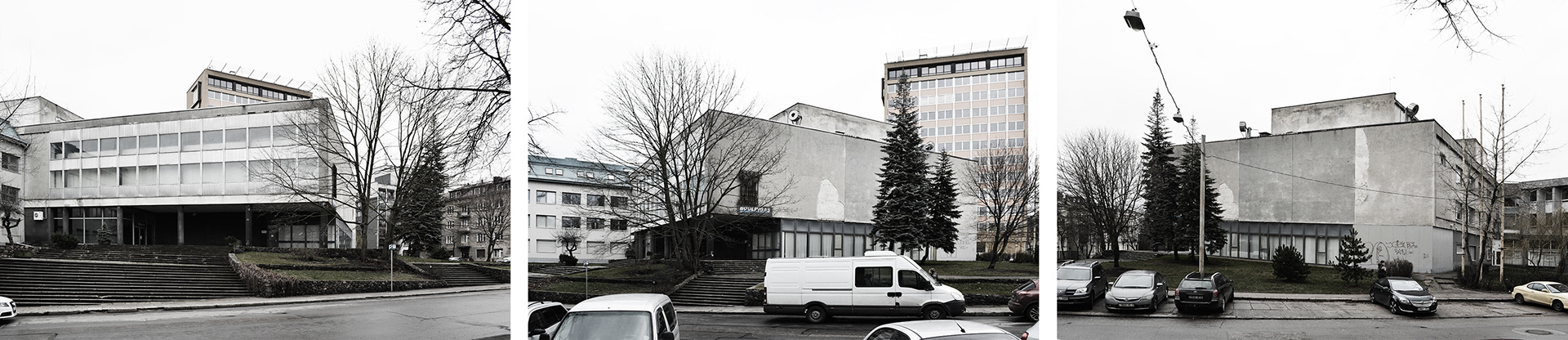
In the early twentieth century, the site was chosen to build a catholic church. However, during the WWI, the construction process was interrupted and the building was never completed. During the Soviet era, the unfinished structure was incorporated into a four-building complex known as the Builder’s Culture House. It consisted of offices, a sports hall, a residential block and a theatre. Although three of them still serve their original functions, the theatre stands abandoned for over 5 years now.
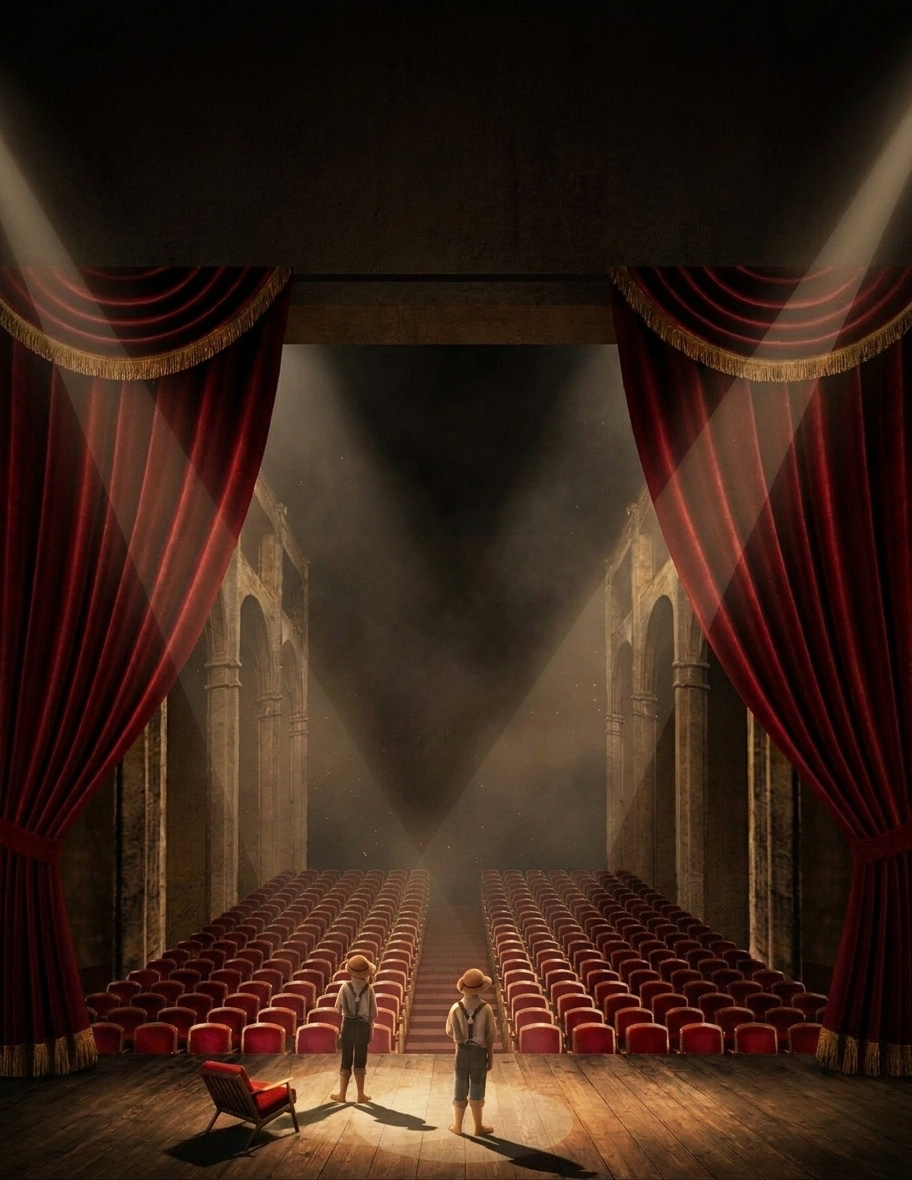
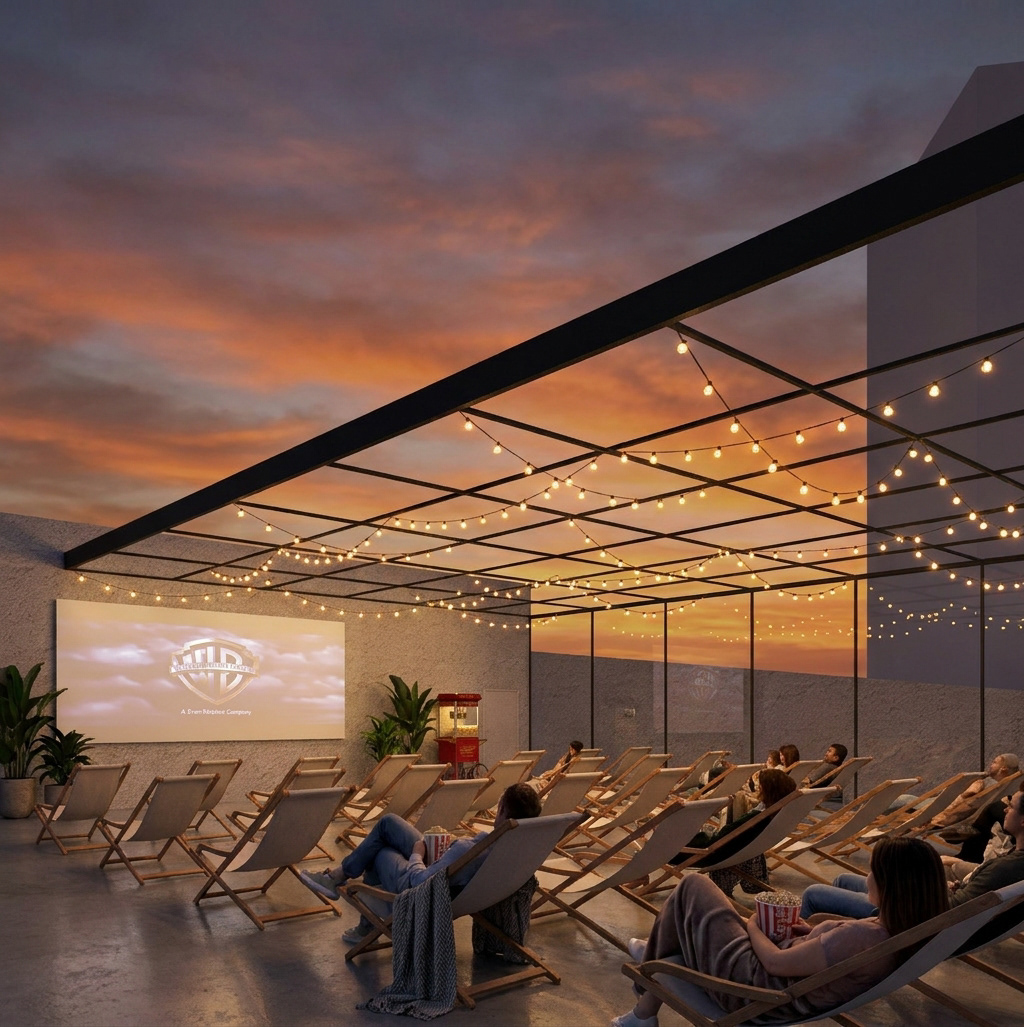
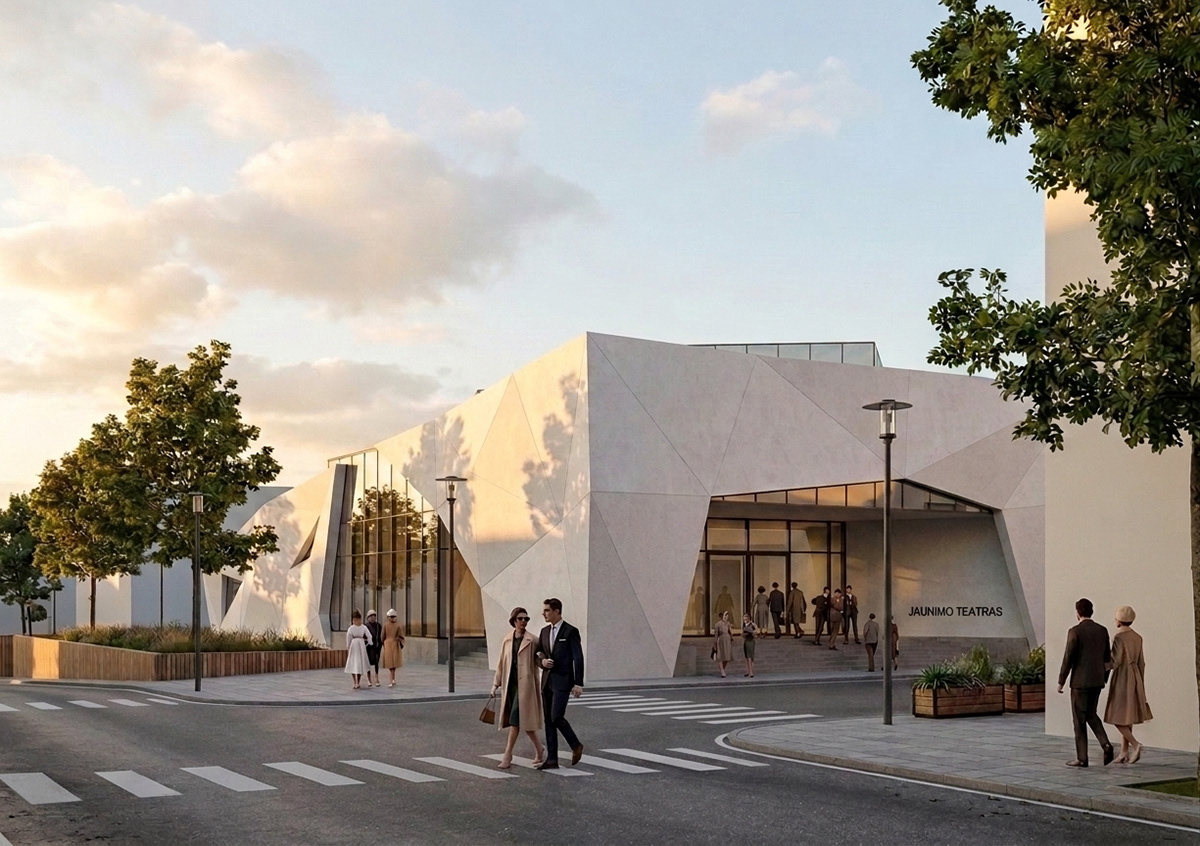
The project aims to revive the abandoned theatre as a working cultural venue and to bring back into view the original columns of the unbuilt church, which have remained hidden for decades beneath later additions. The required programme — two performance halls along with a café, offices and rehearsal rooms — exceeds the area of the existing structure and informs the decision to extend it. The renewal also responds to a wider transformation of the surrounding district, where former factories are being converted into residential lofts and the area is increasingly drawing artists and creative practices.
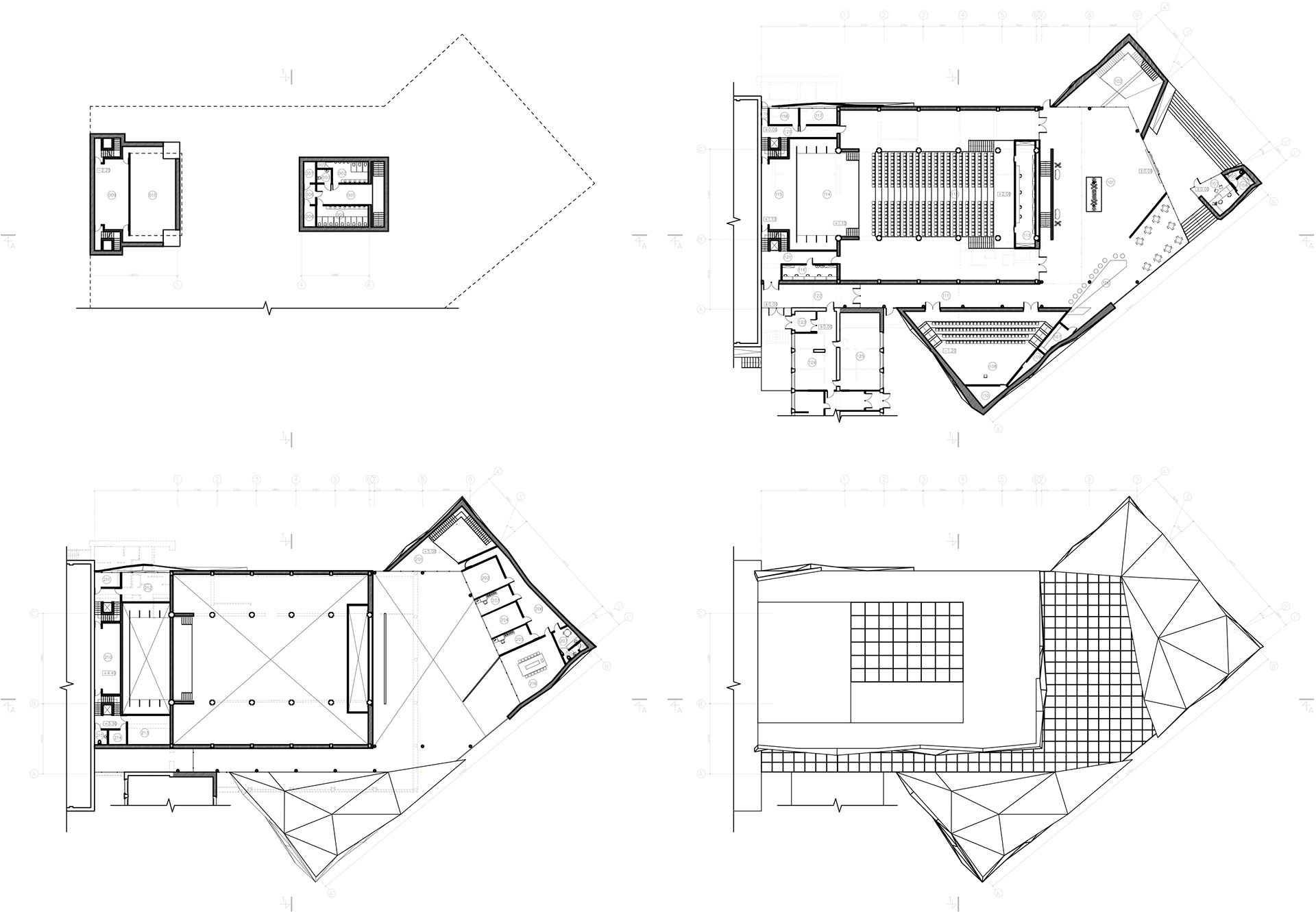
The exterior walls of the original building are in good condition and are kept, while inside, all later walls and floors are removed to expose the historic columns, which become the defining element of the renovated space. This shell now houses the main performance hall and the actors' rooms. A new volume is added alongside, aligned with the principal axes of the site, and contains the entrance, the café, the smaller second hall, and offices on the upper floor. The two parts establish a clear distinction between past and present, while the original concentrates on performance, the addition supports the everyday functions of the theatre.