Year: 2016 (8th semester)
Project type: Thesis Project
Location: Konstitucijos pr. 24, Vilnius, 08106, Lithuania
Tutor: Prof. Kestutis Lupeikis
Project type: Thesis Project
Location: Konstitucijos pr. 24, Vilnius, 08106, Lithuania
Tutor: Prof. Kestutis Lupeikis
The project, developed as a Bachelor graduation thesis, aims to design a Science Museum in Vilnius that brings the achievements of Lithuanian scientists closer to both residents and visitors. Beyond its exhibition role, the museum is conceived as a meeting point for young, ambitious minds - a place that encourages longer stays through a programme of cafés, reading rooms, conferences and changing exhibitions. The architectural concept responds directly to this scientific mission: the museum is composed of two distinct volumes whose pairing borrows from the qubit, the basic unit of quantum computing, in which two different states coexist and reinforce one another. Within the main exposition volume, this idea is extended through a spatial concept of a light wave crossed by lasers.
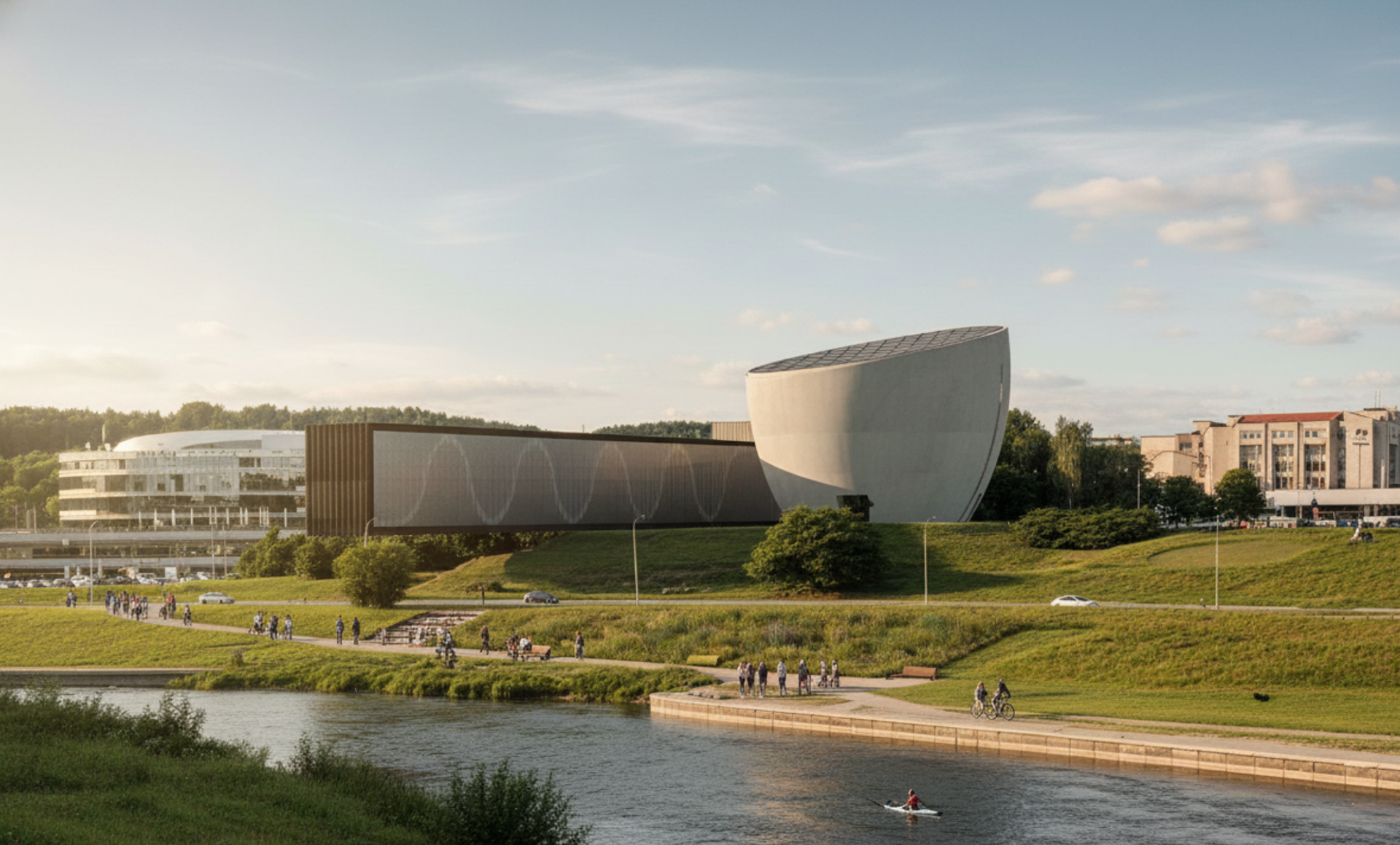
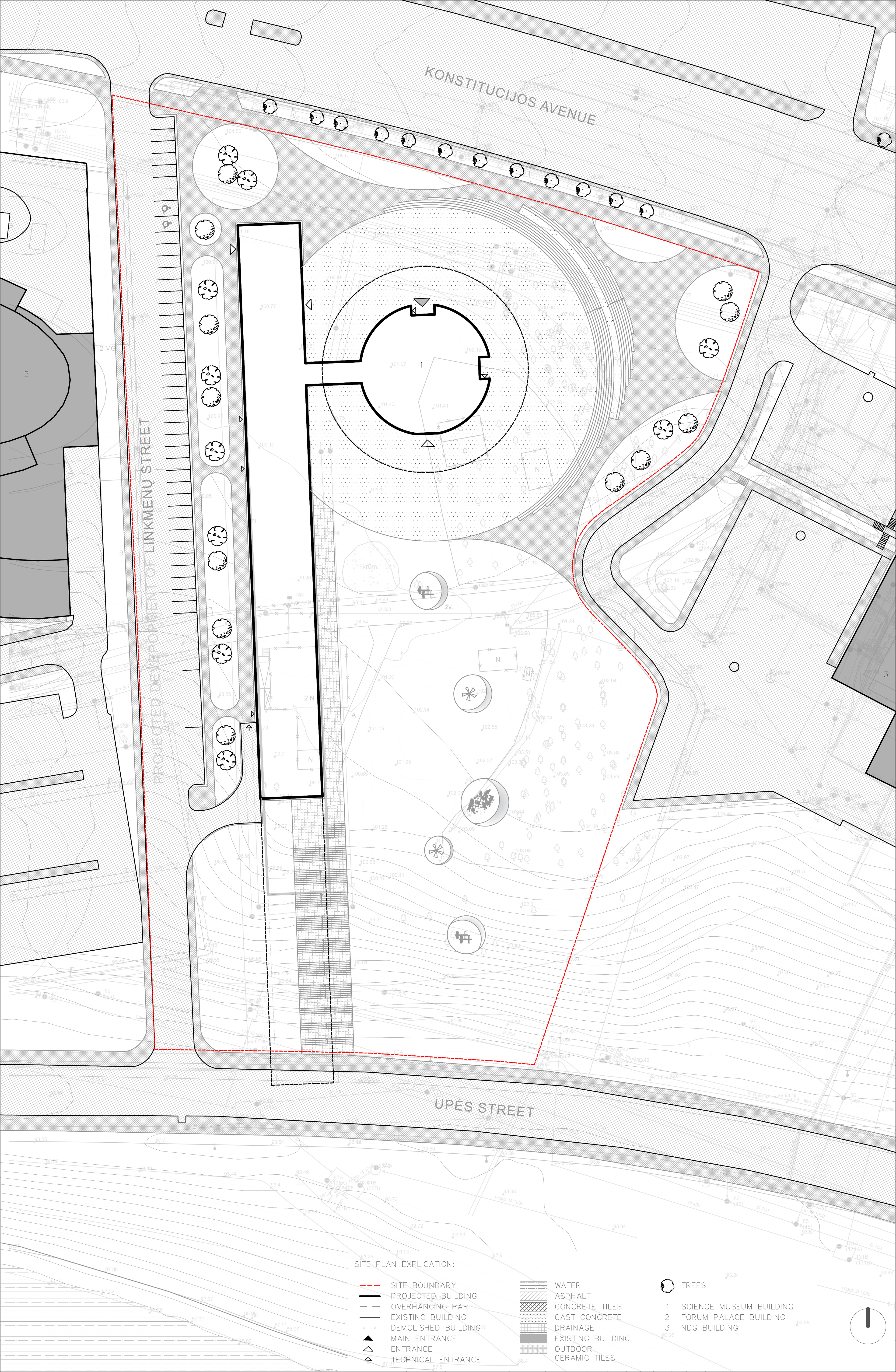
The historic street on the western edge of the site is renewed to accommodate the increased flow of visitors, thus allowing to arrange the proposed composition along the new Linkmenu Street and Konstitucijos Avenue. This organisation divides the site into public and semi-private zones, opens a visual connection between the main exposition volume and the river, and preserves both the existing build-up line and the line of greenery along Upes Street.
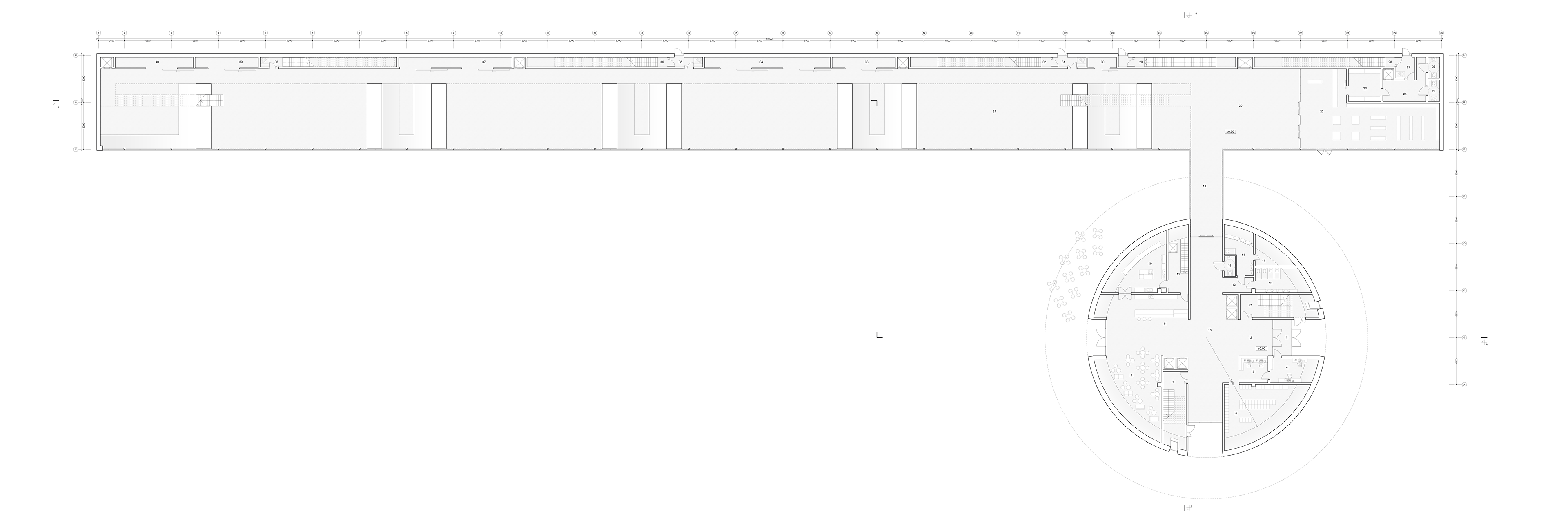
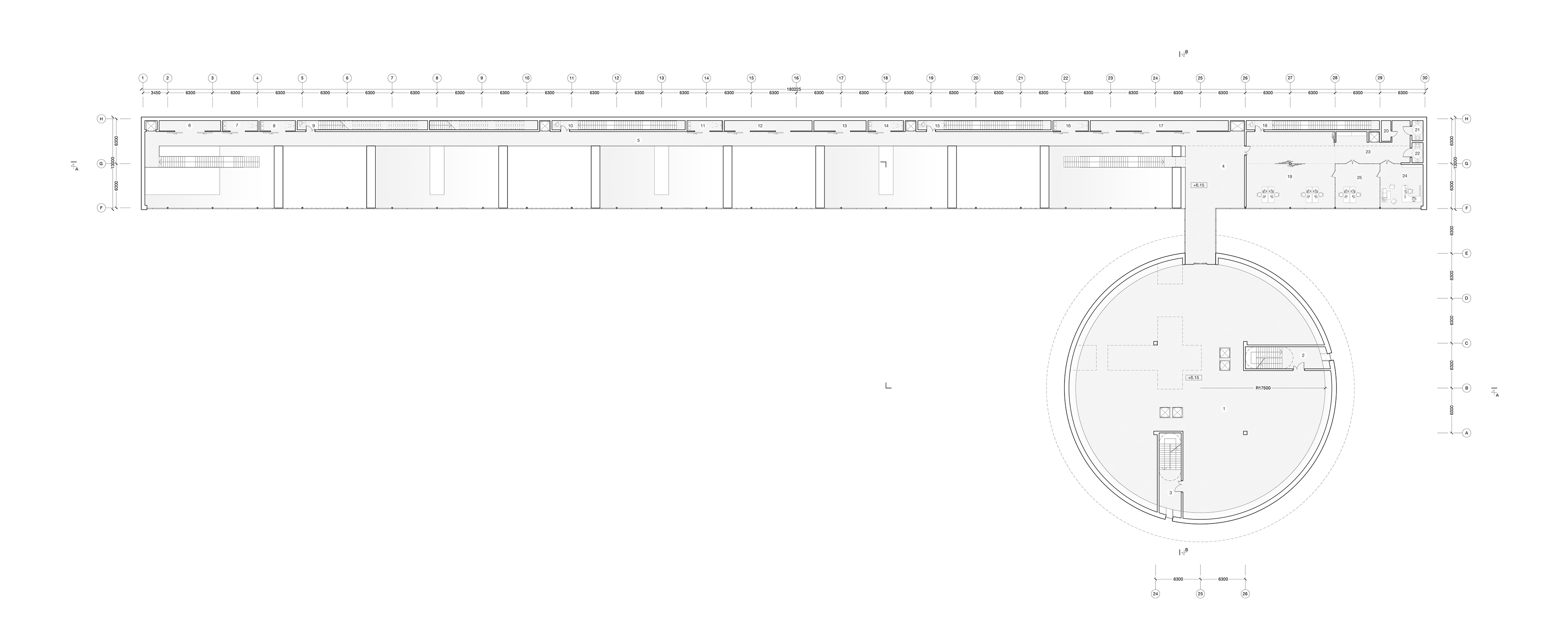
The museum consists of two volumes, which are designed to function independently when needed. The first volume rises across four levels and holds the entrance with cloakroom, the café, the temporary exposition hall, a multi-functional conference space and a reading room. The second one contains the permanent exposition, the offices and the gift shop.
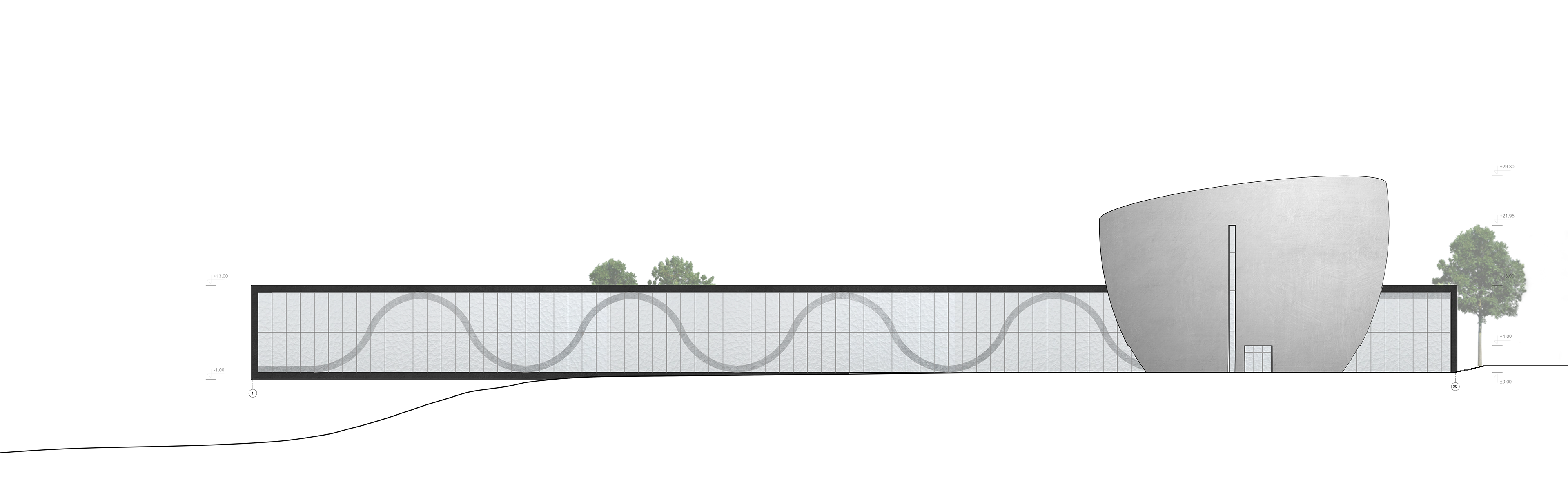
The contrast between the two is reinforced by their cladding. The rectangular exposition volume is finished in matted steel panels engraved by two-colour laser, creating a finishing that is resistant to moisture and soiling - the latest Lithuanian discovery inscribed directly onto the facade, so that the building itself becomes part of the exhibit. The spherical volume is clad in pre-cast concrete panels, a system chosen to support its more sculptural form.